
Living Room Craft Talks
The Fifth Series
A Self-Guided Online Series
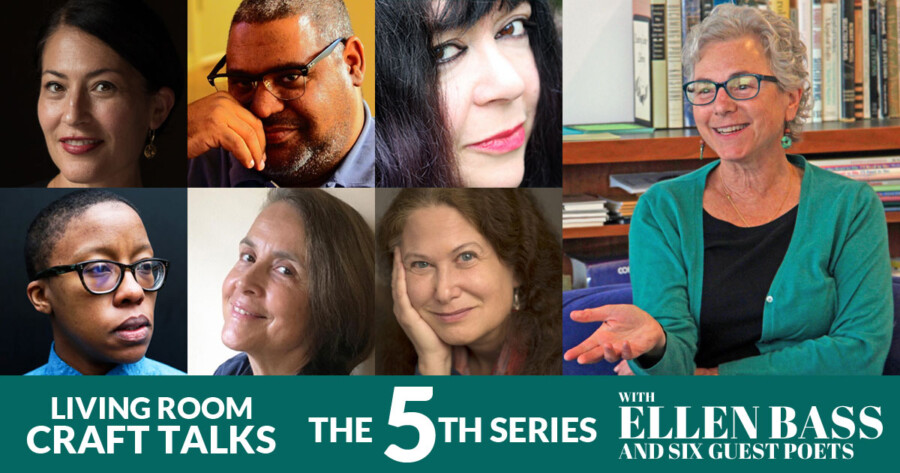
With Ellen Bass and Guest Poets Ada Limón, Chris Abani, Diane Seuss, Donika Kelly, Naomi Shihab Nye, and Jane Hirshfield
You do not need to have taken the previous Living Room Craft Talks to take this series.
If you want to learn more about the strategies you can employ to write poems that are vivid, engaging, meaningful and complex, I’d be delighted to have you join me in the Living Room Craft Talks: The Fifth Series. If you haven’t attended the previous talks, that’s fine. Each series is independent.
I’ll be presenting practical teachings that you’ll be able to put to use at whatever stage of development you’re at—whether you’re just beginning, somewhere in the great middle, or are an accomplished and published poet.
The topics for this series are: the Epistolary Poem, the Modern Elegy, the Sonnet, Transforming Trauma into Art, Metaphor: A Deeper Investigation, and Silences in Poetry.
We’ll be reading exemplary poems from a large and diverse group of poets. And there will be guest appearances from: Ada Limón, Chris Abani, Diane Seuss, Donika Kelly, Naomi Shihab Nye, and Jane Hirshfield!
As we study each week’s subject, we’ll also examine other essential aspects of the craft, including image, syntax, form, diction, music and tone.
These talks are focused on poetry, but prose writers are welcome. The precise attention to structure and language will enrich your work as well.
More About the Topics

Week One: The Epistolary Poem
Guest Poet: Ada Limón
The music stops; moonlight shines on the planks of the floor.
Send me a letter.
–from “The Life of Tu Fu”, tr. Eliot Weinberger
The epistolary tradition–-poems that read as letters–-is an old one, born from a basic human desire to connect. We’ll discuss a wide variety of exemplary poems––from personal poems addressed to a friend about daily life, to poems that cry out to gods and superheroes, to philosophical epistles between artists. We’ll consider the voice of the speaker, the selection of details, and the relationship between the “I” writing the poem and the “you” receiving it. This is a form that is both private and public and can open avenues for more intimacy in your poems. Writing to a particular someone can also bring your writing into sharper focus. I’ll present strategies you can use to create dynamic poems in the epistolary tradition.

Week Two: The Modern Elegy
Guest Poet: Chris Abani
No one wants to write an elegy.
–Kevin Young
The elegy is a poem of necessity. It may have been the first poetic speech, originating when our hunter-gatherer ancestors refused to leave their dead behind. The traditional elegy ritualizes grief, gives it language, and offers at least the beginnings of consolation. The modern elegy may do this as well, but, along with sorrow, there are often more complicated feelings: anger, conflict, guilt, and a resistance to solace. Elegies remember and celebrate our dead and make a space for them to live on the page. We’ll reflect on poems that approach the elegy from a wide range of experience and emotion and I’ll offer structures you can turn to when loss asks us to find words for the inexpressible.

Week Three: The Sonnet
Guest Poet: Diane Seuss
The sonnet is a monument of praise, a field of play, a chamber of sudden change.—Phyllis Levin
Invented in Italy around 1235, this 14-line poem continues to serve as an elastic container for feeling and thought. Within its boundaries there is enormous freedom and its very constraints can lead us to fresh and surprising syntax and startling discoveries. The sonnet has been used to wonder, propose, argue, analyze, and obsess. As Diane Seuss says, “The sonnet is an endlessly fluid, re-imaginable form. It has been hushed, lushed, fragmented, fogged, elated, flipped, and freaked by everyone . . . .” We’ll explore how sonnets maintain integrity whether they work within the received tradition or abandon meter and rhyme entirely, stretching the form to make it new. Examining sonnets from a few traditional and many contemporary poets, you’ll learn how you can explore the potential of this compressed and highly flexible form.

Week Four: Transforming Trauma into Art
Guest Poet: Donika Kelly
come celebrate
with me that everyday
something has tried to kill me
and has failed.
—Lucille Clifton
How does poetry confront pain and make a home for testimony, witness, and the life-changing power of art? How do we use elements of the craft—form, diction, tone, persona, and more–-to transcend the silence that, in Audre Lorde’s words “keeps everything the same?” We’ll reflect on poets whose work faces suffering and endures, work that creates a shared space so others feel less alone, and work that refutes oppression. And we’ll read poems that find humor and even joy in the most unlikely places. As Jane Hirshfield wrote, “That anxiety, grief, and the abysses of chaos can be lured into beauty and meaning, and into the freedom such transmutation itself brings, is no small part of literature’s power.” With the inspiration of these poems, you’ll gain an understanding of how you can delve into intense themes to create meaningful art.
Week Five: Metaphor: A Deeper Investigation
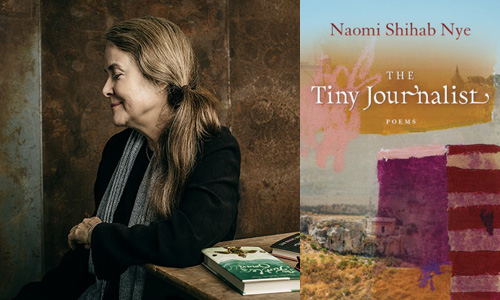
Guest Poet: Naomi Shihab Nye
Metaphor is the raw uranium of poetry.—Tony Hoagland
Metaphor is my favorite aspect of the craft of poetry! I began the very first series of Living Room Craft Talks with metaphor and I’m excited to revisit it again with you, only this time going deeper. Aristotle said that metaphor is what language uses to prove that the world is full of hidden connections. The word metaphor comes from the Greek, meaning “to transfer,” and metaphor does just that. It carries emotion and meaning from the writer to the reader. Metaphor is one of the poet’s primary tools for investigating and communicating experience. We’ll look at poems that illustrate metaphoric language, including similes, kennings, extended and embedded metaphors. I’ll offer methods for finding fresh and surprising metaphors and suggestions for ways to harness this “raw uranium” in your own writing.
Week Six: Silences in Poetry
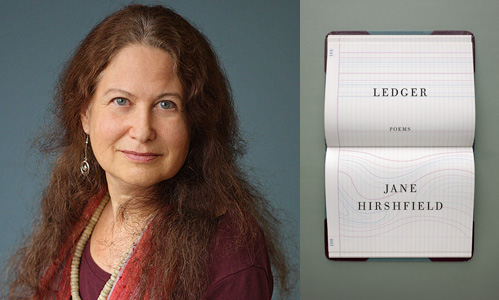
Guest Poet: Jane Hirshfield
It’s not the notes you play, it’s the notes you don’t play.—Miles Davis
“Most good poems hold some part of their thoughts in invisible ink,” writes Jane Hirshfield. In poetry we are often trying to convey what is essentially too complex, too nuanced, too paradoxical to be pinned down with words. And yet we must use words to write. How do we accomplish that? How do we open the poem to those silences that make room for the reader to enter, to engage, to bring their own response, rather than being told what to think? This is a practice that lives at the very heart of poetry. As Rilke wrote in Letters to a Young Poet, “Live the questions.” We’ll hear poems that reveal eloquent silences and you’ll gain an understanding of how to bring this fertile spaciousness into your poems.
From Past Students
Logistics for the Series
Technical Format for the Series:
The Living Room Craft Talks: The Fifth Series was originally recorded as a Zoom craft talk series. Now, it is available as a self-guided, multimedia series that is available online through a participant-only portal on this website. All access is for 90 days. See below for details.
Your Registration Email:
The email address that you enter into the billing information on the following registration pages will be the email address that is sent your confirmation email. If you wish the series materials to be sent to a different email address than the one you use for billing, please email Jen at jen@ellenbass.com and provide her with the alternative email address.
While signing up for this talk series you will be asked to be added to Ellen’s email list (this is how all of the talk series information is sent). YOU MUST DO THIS IF YOU WISH TO RECEIVE THE EMAILED INSTRUCTIONS ON HOW TO ACCESS THE SERIES. You are able to cancel your subscription to Ellen’s email list at any time, but please keep in mind that if you cancel your subscription before all of the talk series’ emails are sent, you may not know how to access your subscription materials.
Emails About This Series and Your Registration:
Once your registration payment has been processed, you will be sent an automated email from jen@ellenbass.com confirming your spot in the series and giving you important information to access the series materials. If that email does not reach you within 1 hour, please check your spam, junk, promotions, or trash folders as the email could have been misdirected.
All emails about this series are sent automatically from jen@ellenbass.com. To make sure that you receive those emails, which include a confirmation with details on how to access the series materials, please add jen@ellenbass.com to your contact list before you register. Not sure how? Click the button below.

More From Past Students
Registration Options
Please read through the details for each of the registration option so that you are clear about the differences between them.
If you have questions about the Downloadable Edition and whether your device will be able to download the talks, please read the Downloading Tips and FAQs.
Access to the Series
Registration gives you immediate access to this series. After registration, please either go to the My Account link at the top of the website or the link for your purchased series at the bottom of the website to access the series. You will also receive an automatic confirmation email that discusses how to access the series.
Online access is only for 90 days, whether you purchase the Standard Access version or the Downloadable Edition. For the Downloadable Edition, you must download the craft talks and handouts to your device within that 90 day period for you to have access to the craft talks and handouts on your device after your access to the craft talk portions of this website expires in 90 days.
Scholarships
Full and partial scholarships available for individuals with financial need for Standard Access only. If applying for a scholarship, please do NOT register for the series in advance. Fill out the form found at the following link to apply: https://www.ellenbass.com/events/living-room-craft-talk-series/scholarship-application/
Questions and Concerns:
If you have any questions or concerns, please email Jen at jen@ellenbass.com.
Cancellations and Refunds:
If within 72 hours of purchasing the Downloadable Edition you find that you cannot download the craft talks, contact Jen and she can move your registration to the Standard 90-Day Access option and refund you the difference. No other refunds are offered.